Waxing your car has plenty of benefits, but if there’s one quality that sets it apart from coating, it’s gloss. Not all car waxes produce the same kind of shine, though — the depth and character of that gloss depend entirely on the ingredients and blending technology behind the wax.
The Secret Behind Wax Shine: It’s All About the “Wax” Itself
There’s nothing quite like the deep, glassy shine of a freshly washed and waxed car — it’s one of the simple joys of being a car enthusiast. The reflection can look almost like the still surface of a beautiful lake. Even in today’s world, where coatings have become the standard, car wax remains a timeless favorite, and that enduring gloss is the reason why.
This shine comes from the gloss-producing ingredients in the wax — but not every wax uses the same ones. Some are animal-based, others plant-based, and some are petroleum-derived (see comparison table). Whatever the source, nearly all of them share one thing in common: they’re built around natural or synthetic wax.
Interestingly, wax wasn’t originally used for cars at all. Beeswax, harvested from honeycombs, was traditionally applied to antique pottery and furniture to smooth out fine surface scratches and bring back their shine. It was only after cars became widespread that people began using wax for vehicle maintenance too.
Among All Waxes, Carnauba Wax Reigns Supreme
Waxes can be broadly divided into two categories: natural wax and synthetic wax. Natural wax is refined directly from substances that occur in nature, while synthetic wax is chemically manufactured — typically from petroleum — to mimic the same molecular structure.
Car wax formulas vary in ingredients depending on their type, grade, and intended use. Among all the natural waxes used in car care, carnauba wax is renowned for producing the richest, deepest shine.
Carnauba wax is a natural ester wax refined from the dried, powdered sap of the carnauba palm, native to northern Brazil. Because only the leaves are harvested — without cutting down the tree itself — carnauba wax is also considered an environmentally friendly resource.
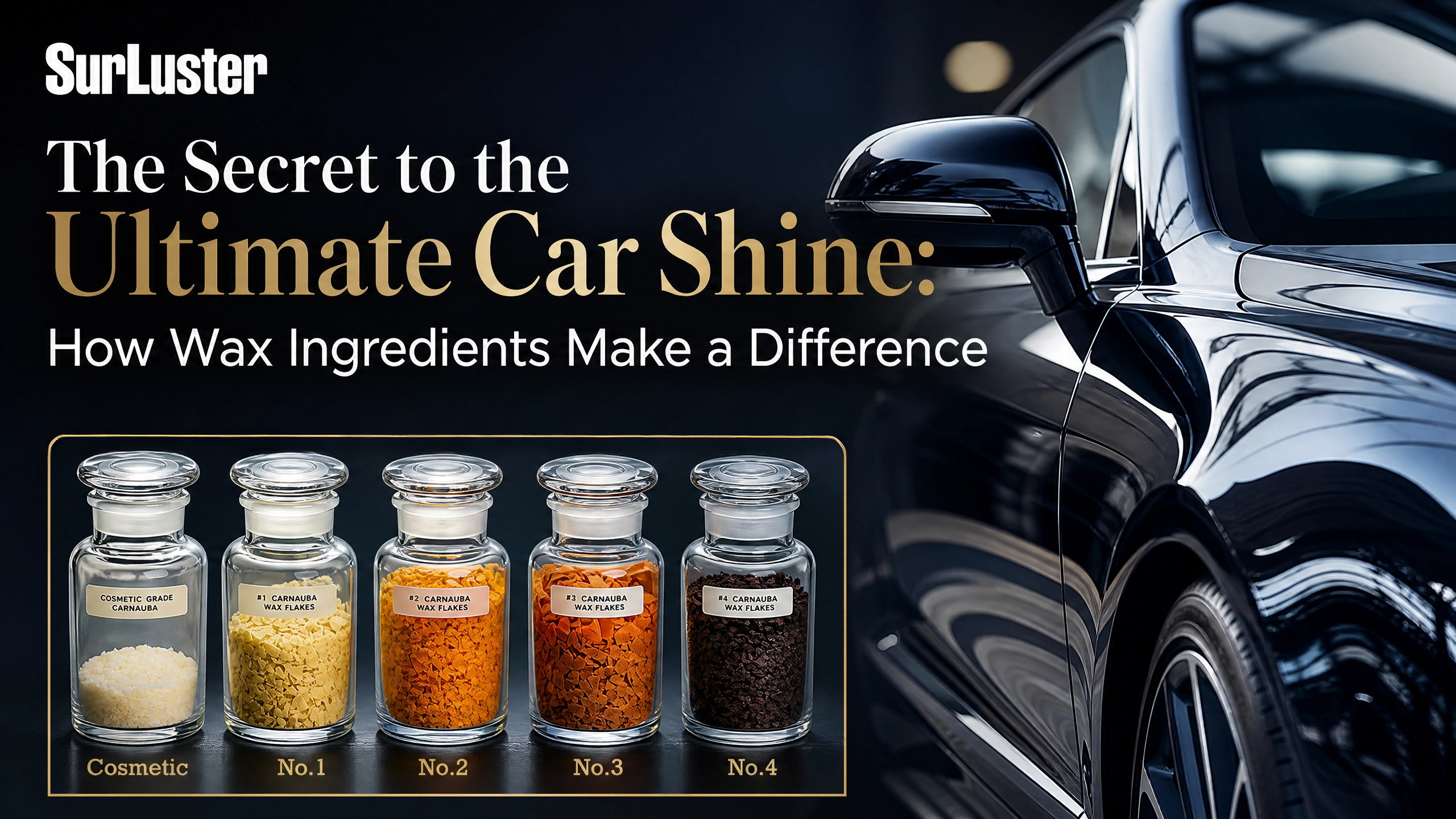
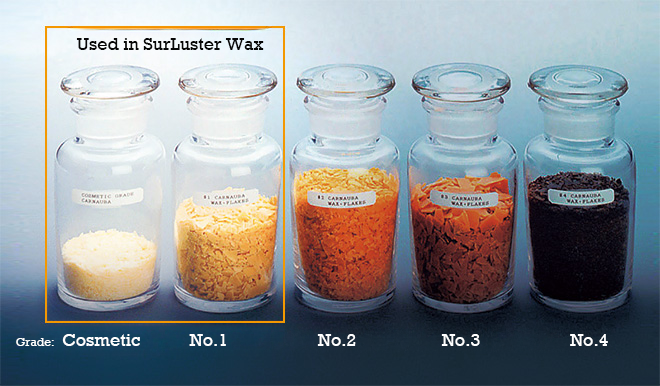
The finest carnauba wax comes from young leaves at the very top of the tree, known as “olho.” This is where Grade 1 and Grade 2 carnauba wax originate. These top leaves account for only about 20–30% of the total harvest, and within that, just 1% — the youngest and most delicate portion — yields what’s known as “cosmetic grade” or “Flora Fina,” a rare and highly prized material.
As you move further down the tree, the leaves yield lower grades of wax, typically classified as Grade 3 through Grade 5 carnauba wax.
Thanks to its hardness and crystal-clear shine, carnauba wax is widely used beyond the automotive world — in pharmaceutical and confectionery coatings, fruit glazing, and as an ingredient in ointments and cosmetics. But it’s best known for one thing above all: its stunning, deep gloss as a car wax ingredient. Premium car wax products use pure carnauba wax as their core ingredient, often blended with petroleum-based components to make application and buffing easier.
How Long Does Carnauba Wax Last?
Solid car wax formulated with carnauba wax is known for its beautiful, glass-like finish — and typically lasts about 1 to 1.5 months.
The number one enemy of a wax coating is rain. To keep your car looking its best, the key is reapplying wax at least once a month, before the protective layer has a chance to break down.
SurLuster’s Recommended Carnauba Waxes