
Your car has a few years on it. The engine sounds a little rougher at idle, the oil level drops between changes, or you simply want to keep it running well for longer. Then you look at the shelf of engine oil additives, and they all seem to promise the same thing.
Here is the short answer. An oil additive can support your engine oil: it can reduce friction, help keep the engine clean and condition aging seals. It cannot repair broken parts or replace regular oil changes. What matters most is choosing the additive that matches the problem.
What engine oil does, and what changes with age
Engine oil does several jobs at once:
- It lubricates. A thin film of oil keeps metal parts from rubbing directly against each other.
- It protects. That film reduces wear, especially when you start the engine.
- It cleans. Oil carries dirt and deposits away to the oil filter.
- It helps seal. Oil helps the piston rings seal against the cylinder walls.
As an engine ages, things change. Deposits and sludge slowly build up, especially with lots of short trips or late oil changes. Rubber seals harden and shrink, and small gaps between moving parts grow with wear. You may notice more noise and vibration, a rougher idle, small oil leaks, or the oil level dropping between changes.
What an oil additive can do
An oil additive is a concentrated blend that you pour into your engine oil. Most do one of four jobs:
- Reduce friction. Lubricating agents form a protective film on metal surfaces. This can make the engine run more smoothly and quietly, and protect it during cold starts.
- Support older engines. Some formulas thicken the oil film slightly to help seal small gaps in worn engines, which can reduce noise, vibration and oil use.
- Clean. Detergents slowly loosen sludge and deposits while you drive, and the dirt leaves the engine at the next oil change.
- Condition seals. Seal conditioners help hardened rubber seals become flexible again, which can reduce seepage and oil loss.
SurLuster designs several LOOP formulas to reduce friction, which helps with smoother running and fuel economy. How much difference you notice depends on the engine, the condition of the oil and how you drive.
What an additive can’t do
An additive works with your oil, not instead of it. Keep these limits in mind:
- It doesn’t replace oil changes. Keep changing the oil and filter at the interval your car’s manufacturer recommends.
- It can’t fix broken parts. If a seal is torn, a gasket is cracked or a part is worn out, no additive will repair it.
- It can’t solve serious problems. A warning light, a knocking noise or a sudden loss of oil needs a mechanic.
- It doesn’t work the same in every car. Results depend on the engine, the oil’s condition and how you drive.
- More is not better. Use one additive at a time, and never fill the engine above the maximum oil level.
Which LOOP oil additive fits which need
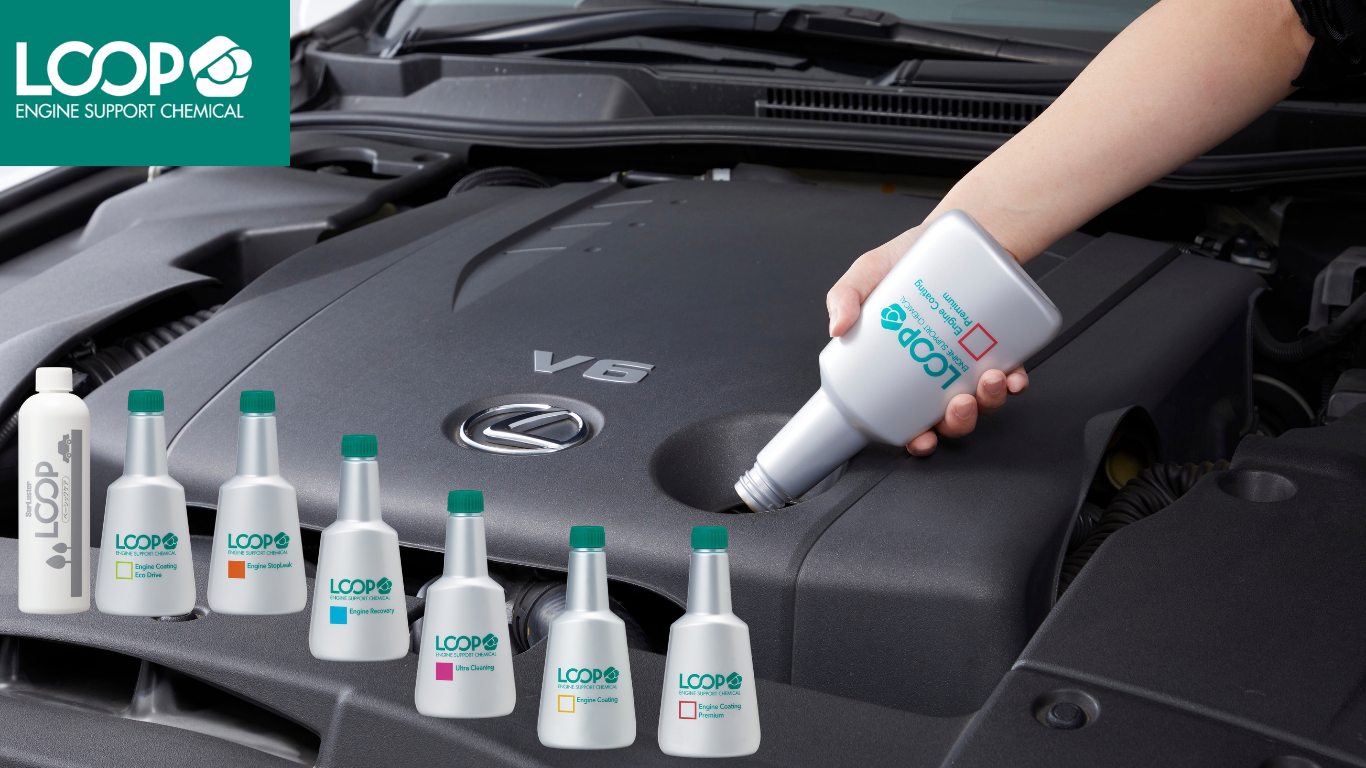
Every LOOP oil additive comes in a 300 mL bottle, and one bottle suits an engine that holds 3 to 6 liters of oil. The difference is the job each one is made for.
| Product | Made for | When to add it |
|---|---|---|
| LOOP Basic Care | Everyday protection and smoother running for most gasoline and diesel engines | At every oil change |
| LOOP Engine Coating | Keeping a newer engine (up to about 50,000 km) smooth and protected, with better cold starts | At every oil change |
| LOOP Engine Coating Eco Drive | Hybrid and idle-stop gasoline cars, whose engines restart often (not for diesel) | At every oil change |
| LOOP Engine Coating Premium | High-performance, turbocharged and luxury engines | At every oil change |
| LOOP Engine Recovery | Engines over 50,000 km with more noise, less power or higher oil use | At every oil change |
| LOOP Ultra Cleaning | Engines with sludge build-up | At an oil change; after 3,000–5,000 km, change the oil and filter |
| LOOP Engine Stop Leak | Seeping seals, and oil use caused by hardened valve stem seals | About every 20,000 km |
If you’re not sure where to start, LOOP Basic Care suits most cars for general protection. If your car has covered more than 50,000 km, look at LOOP Engine Recovery.
How to use an oil additive safely
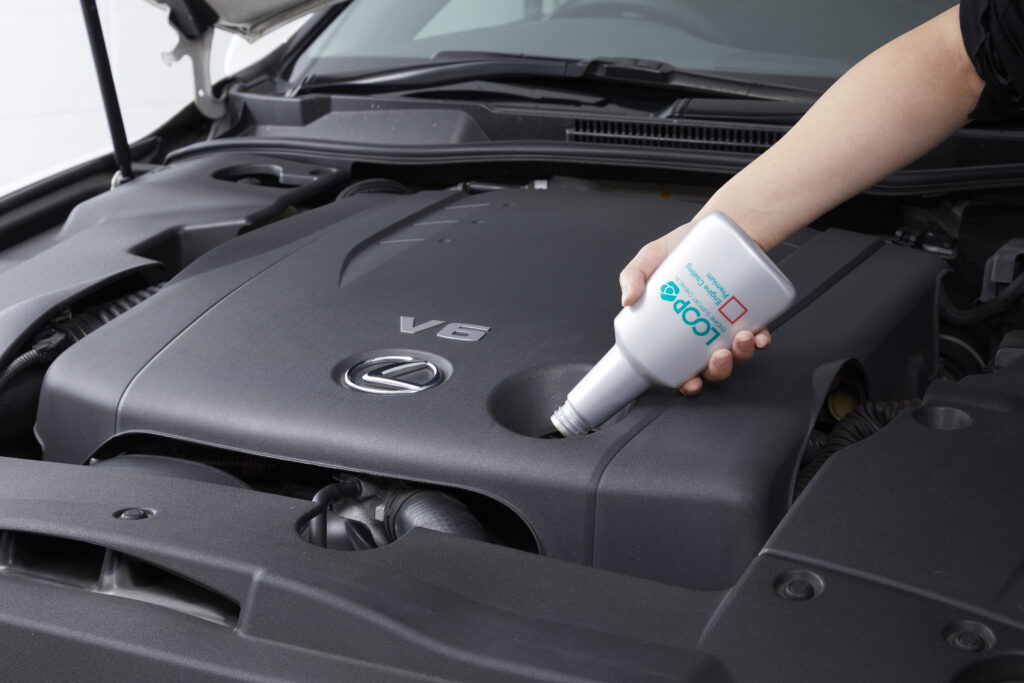
- Pick one additive. LOOP oil additives can’t be combined with other additives.
- Check your oil capacity. One bottle suits engines that hold 3 to 6 liters of oil.
- Work with the engine off and cool. Don’t add it right after driving, when the engine is hot.
- Pour it in with the nozzle. Use the oil filler opening, and don’t let the oil go above the maximum level.
- Idle and check. Close the cap, let the engine idle for about five minutes, then check the dipstick to make sure the oil level is in the correct range.
Wipe any spills off the engine or paint straight away, and work in a well-ventilated place. LOOP oil additives are not for 2-stroke engines, and some are not for rotary engines, so always read the label first.
Frequently asked questions
Is an oil additive the same as a fuel additive?
No. An oil additive goes into the engine oil and works on lubrication, wear and seals. A fuel additive goes into the fuel tank and cleans the fuel system. To learn more, read our guide to fuel additives.
Do I need to add it at every oil change?
Most LOOP oil additives are made to be added at every oil change. LOOP Engine Stop Leak lasts longer, so for prevention it is used about every 20,000 km.
How soon will I notice a difference?
It depends on the product and the engine. Cleaning and seal-conditioning formulas work gradually: LOOP Ultra Cleaning works over 3,000–5,000 km of driving, and LOOP Engine Stop Leak needs some driving before it takes effect, depending on the leak.
Find the right LOOP additive
The right additive can help an engine you plan to keep for years. Explore the full LOOP range on our products page.
