
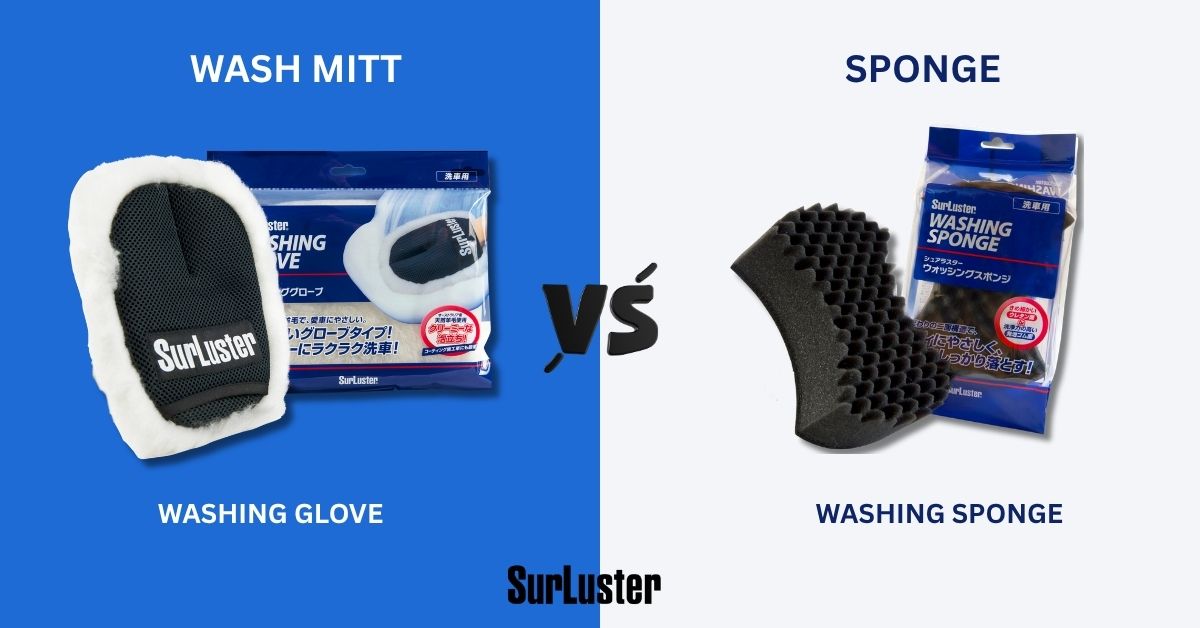
The bucket is full of foam and the car is rinsed. Now you reach for the tool that will actually touch the paint: a wash mitt or a sponge?
Here is the short answer. Both can wash your car safely. What scratches paint is usually not the tool itself but grit dragged across the surface. The real differences are how each tool holds foam, how much area it covers and which jobs it does best.
Why washing can scratch paint
Every car collects fine sand and grit on the road. When you wash, any particle caught between your mitt or sponge and the paint gets dragged along with it. Each one can leave a tiny scratch. Over many washes, those scratches show up as fine swirls when the sun hits the paint, especially on dark colors.
Three things raise the risk:
- Skipping the rinse. Loose grit is still on the car when you start washing.
- Pressing hard. More pressure pushes particles into the paint.
- A dirty tool. A mitt or sponge that is already holding grit carries it to every panel.
Foam helps because it puts a slippery layer between the tool and the paint. But no tool can make up for grit that should have been rinsed away first.
The wash mitt: soft wool and plenty of foam
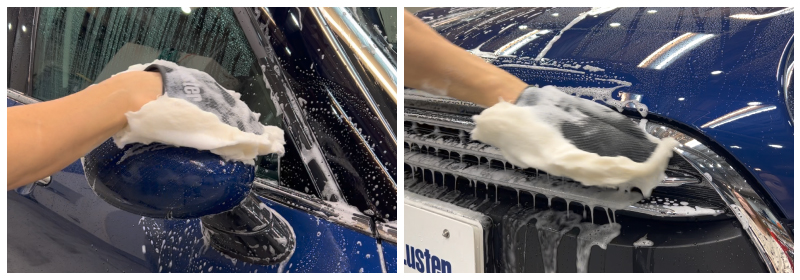
A wash mitt is a glove-shaped tool that you wear on your hand. SurLuster’s Washing Glove uses soft natural Australian wool sewn onto a breathable mesh backing.
- Gentle on paint. The wool is made to clean without scratching and is a good match for waxed or coated cars.
- Lots of foam. Wool builds a creamy foam that keeps a soft layer between the mitt and the paint.
- Quick on large panels. The wide wool surface covers doors, the roof and the hood quickly, and the glove shape fits your hand, so it is hard to drop.
Use it with a neutral car shampoo such as Car Shampoo 1000. Avoid strong acidic or alkaline cleaners, and don’t use it with Cleaner Shampoo. Wash in straight up-and-down or side-to-side strokes, which keeps the wool from tangling.
The sponge: two sides for two jobs
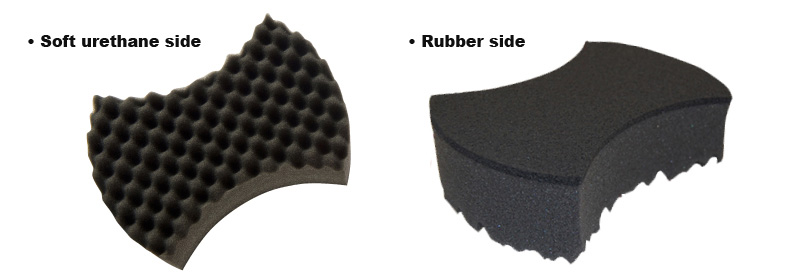
A good car wash sponge is very different from a kitchen sponge. SurLuster’s Washing Sponge has two layers, each with its own job.
- Soft urethane side for everyday washing. Fine, soft urethane makes a creamy foam. A wave pattern on the surface reduces how much of the sponge touches the paint, while still cleaning well.
- Rubber side for stubborn spots. A layer of moist, flexible foamed rubber helps lift tougher dirt such as dried insects or bird droppings. Use it gently, and use this side if you wash with a cleaner shampoo.
- Shaped for gaps and corners. The sponge fits your hand, and its corners reach into panel gaps and other tight areas.
It is suitable for all paint types, including metallic, pearl and mica finishes. Put the shampoo on the urethane side, wash without pressing hard, and avoid heavy scrubbing.
Which should you choose?


| Washing Glove | Washing Sponge | |
|---|---|---|
| Material | Natural wool on a mesh backing | Soft urethane and foamed rubber |
| Best for | Large panels and routine washes, especially waxed or coated cars | Panel gaps, corners and stubborn spots such as insects |
| Shampoo | A neutral shampoo such as Car Shampoo 1000 (not Cleaner Shampoo) | Car shampoo on the urethane side; the rubber side if you use a cleaner shampoo |
| Aftercare | Rinse, smooth the wool by hand, dry in the shade | Rinse and dry in the shade |
Choose the glove if most of your washing is on large panels and you want to cover them quickly and gently. Choose the sponge if you want one tool for both gentle washing and stubborn spots. They also work well together: the glove for the main panels, the sponge for gaps and tougher dirt.
Habits that matter more than the tool
Whichever you choose, these habits do the most to prevent scratches:
- Rinse the car first. Wash away loose sand and grit with plenty of water before anything touches the paint.
- Rinse the tool before you start. Soak the mitt or sponge in clean water so it is soft and free of dust.
- Use plenty of foam and a light touch. Let the shampoo do the work instead of pressing hard.
- Rinse the tool often. Rinse out the dirt it collects as you go. A second bucket of clean water just for rinsing makes this easy.
- Start at the top. Wash from the roof down, so the dirtiest lower panels come last. Our guide to washing your car covers the full routine.
- Don’t use a dropped tool straight away. If the mitt or sponge falls on the ground, rinse it thoroughly before it touches the paint again.
After washing, rinse your mitt or sponge thoroughly and let it dry in the shade, away from direct sunlight and heat. Never store it wet or dirty. Smooth the glove’s wool by hand while it is wet, and if it needs a deeper clean, use a wool detergent rather than bleach or strong stain removers.
Frequently asked questions
- Can I use the same mitt or sponge on my wheels?
-
It’s better not to. Wheels collect brake dust and heavy road grime that you don’t want to carry back to the paint. Keep a separate tool for wheels: Wheel Cleaner, for example, comes with its own sponge.
- Which is better for a coated car?
-
The Washing Glove is made with waxed and coated cars in mind. Pair it with a neutral shampoo such as Car Shampoo 1000.
- What about bird droppings or dried insects?
-
The rubber side of the Washing Sponge helps with stubborn spots like these. For droppings that have dried on, see our guide to removing bird droppings from car paint.
Upgrade your wash kit
The right tool, used with a light touch, keeps every wash gentle on your paint. Take a closer look at the Washing Glove and the Washing Sponge.
