
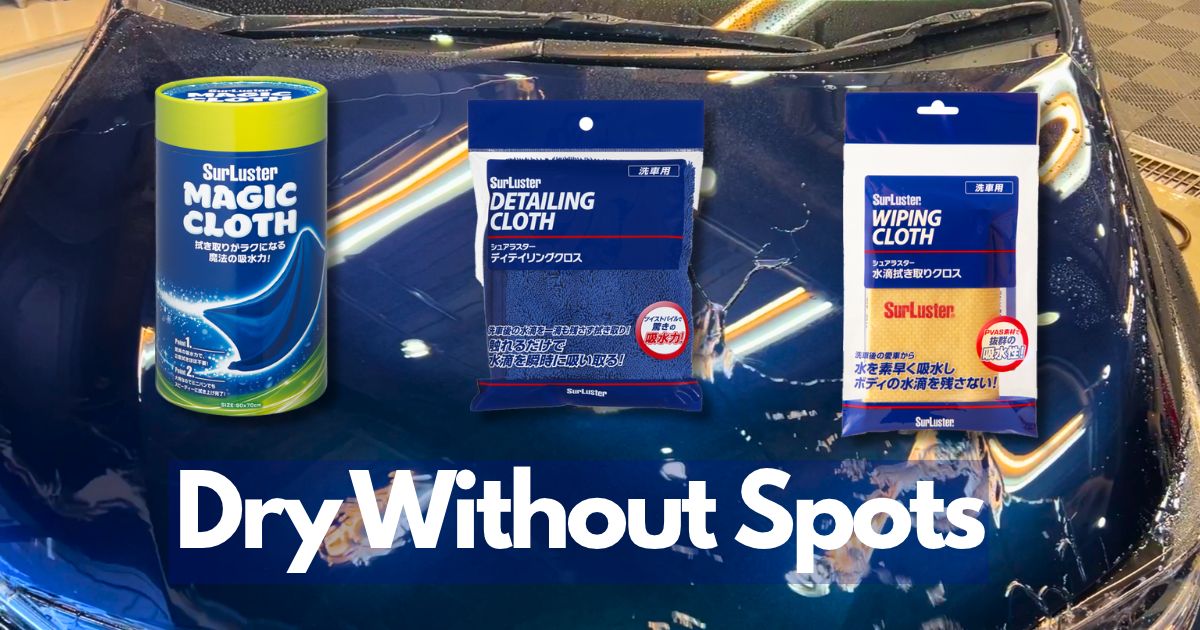
You rinse off the last of the shampoo and the paint looks perfect. A few minutes later, it is covered in faint dots and rings. Or you dry it carefully, then notice fine marks where the towel went.
The short answer: dry the car soon after the final rinse, out of direct sunlight, with a soft, absorbent cloth that you guide across the paint instead of scrubbing. Then catch the water hiding around mirrors, badges and door edges before it runs back down. Here is why each part matters.
Why water spots appear after washing
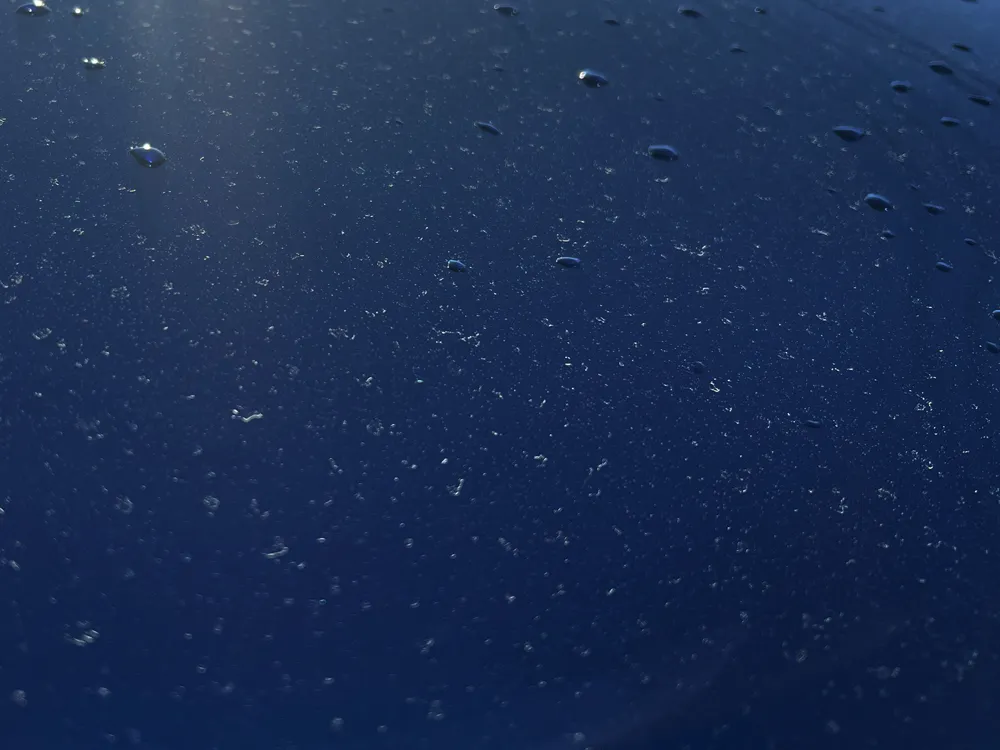
Tap water contains small amounts of dissolved minerals. When a droplet dries on its own, the water evaporates but the minerals stay behind as a faint ring or dot. That is a water spot. The harder your local water, the more visible the spots tend to be.
Three things make spots more likely:
- Sun and heat. A warm panel can dry droplets in minutes, often before you reach them.
- Wind. Moving air speeds up drying, especially on the roof and hood.
- Leftover shampoo. Shampoo that isn’t fully rinsed off can dry into streaks along with the water.
Fresh spots usually wipe away easily. Spots left for days are much harder to remove. So the goal is simple: take the water off before it has time to dry by itself.
How drying can scratch paint
Drying is the last time a cloth touches every panel, so it carries the same risk as washing. Grit that survived the rinse, a cloth that has picked up dirt, or simply too much pressure can leave fine marks that show up as swirls in the sun.
Most drying scratches come from three habits:
- Rubbing back and forth. Scrubbing drags any particle across the paint again and again. Guide the cloth gently in one direction instead.
- Pressing hard. A good drying cloth picks up water with a light touch. Extra pressure only pushes grit into the paint.
- Using a dirty or dropped cloth. A cloth that has touched the ground or the wheels can carry grit back to the paint. Keep your drying cloths for the body and glass, and swap one that falls for a clean one.
Good drying starts with a good wash and a thorough rinse: the less grit left on the car, the less the cloth can drag around. Our guide to choosing a wash mitt or sponge covers the washing habits that prevent scratches.
Choosing the right drying cloth
No single cloth suits every part of the car. Large flat panels, tight gaps and quick everyday drying each call for a different design. SurLuster makes three drying cloths:
| Magic Cloth | Detailing Cloth | Wiping Cloth | |
|---|---|---|---|
| Material | Ultra-fine microfiber | Long-pile microfiber | PVAS, a soft, absorbent synthetic material |
| Size (approx.) | 90 × 70 cm | 50 × 30 cm | 43 × 32.5 cm |
| Best for | Roof, hood, windshield, doors and side panels | Under the mirrors, around emblems, grille gaps | Quick drying of painted, waxed or coated panels |
| How to use | Spread it wide and glide it gently in one direction. Turn it over when one side is full; it isn’t made to be wrung out. | After the first pass, place the long-pile side on the area and let it soak up the water. | Wipe gently in one direction and wring it out as you go. |
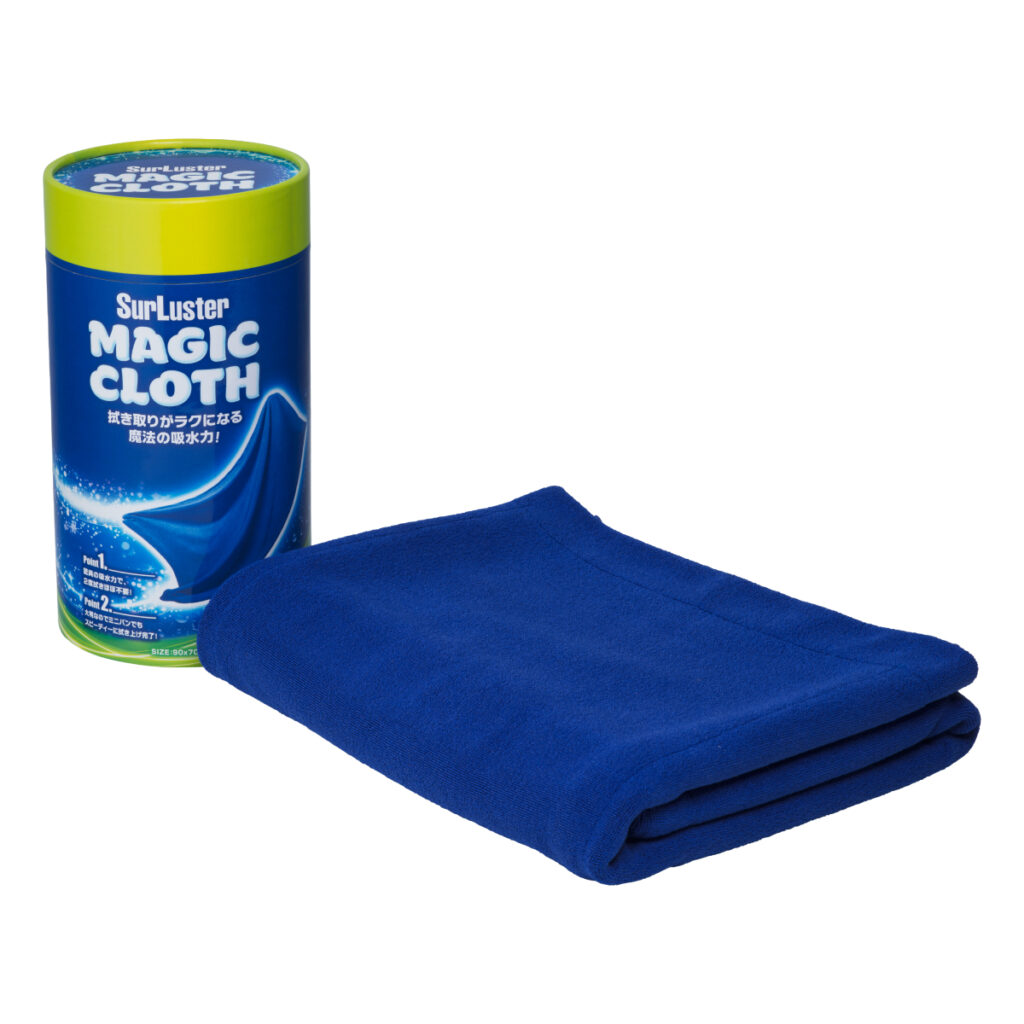


The Magic Cloth and Detailing Cloth work well together: the large cloth takes most of the water off the body, and the small one picks up what is left in the details. Neither is meant for scratched, cracked, aged or repainted paint.
If you prefer a cloth you can wring out, the Wiping Cloth is made for drying only. Follow it with a microfiber cloth for the last few droplets.
A simple drying routine
- Dry in the shade, straight after rinsing. Wash and dry out of direct sunlight, on a cool body. Make sure all the shampoo is rinsed off, then start drying right away.
- Work from the top down. Start with the windshield, windows and roof, then the hood and trunk, then the sides. That way, water from higher panels can’t run onto areas you’ve already dried.
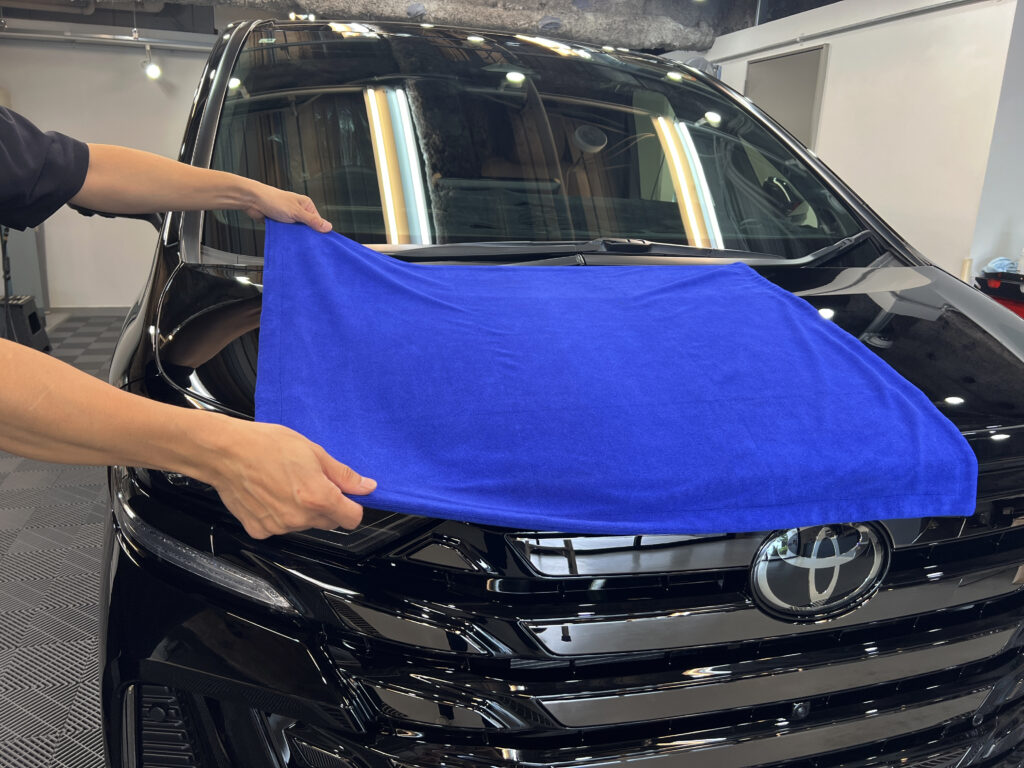
- Glide, don’t scrub. On large panels, spread the cloth out, hold both ends and draw it gently across the surface in one direction. On the doors, hold it with both hands and follow the shape of the body.
- Use a dry part of the cloth. A saturated cloth just moves water around. Turn it over or switch to a dry section.
- Dry the details. Water collects under the mirrors, around emblems, in the grille and along trim edges. Press a small cloth into these areas instead of rubbing.
- Open up and check. Open the doors, trunk and fuel door, and wipe the edges and door jambs. A few minutes later, look for drips that have run out from the mirrors or trim, and dab them dry.
Less water on the car, less to dry
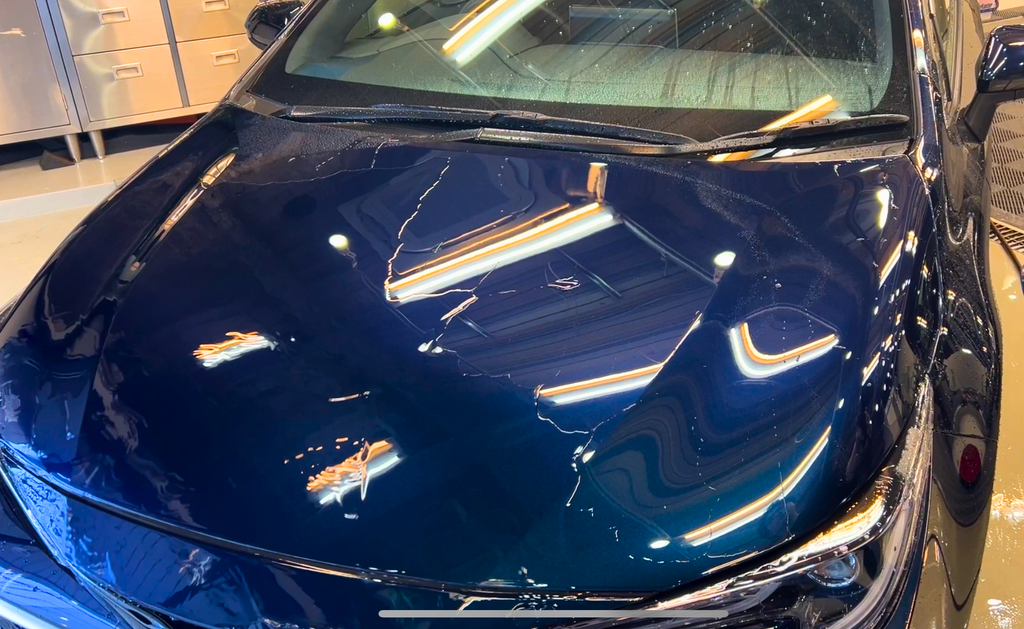
The less water left on the car after rinsing, the less there is to dry, and the less time it has to form spots. That is the idea behind Zero Water Slider, a pH-neutral car shampoo whose formula helps water slide off the surface, reducing the droplets left after washing.
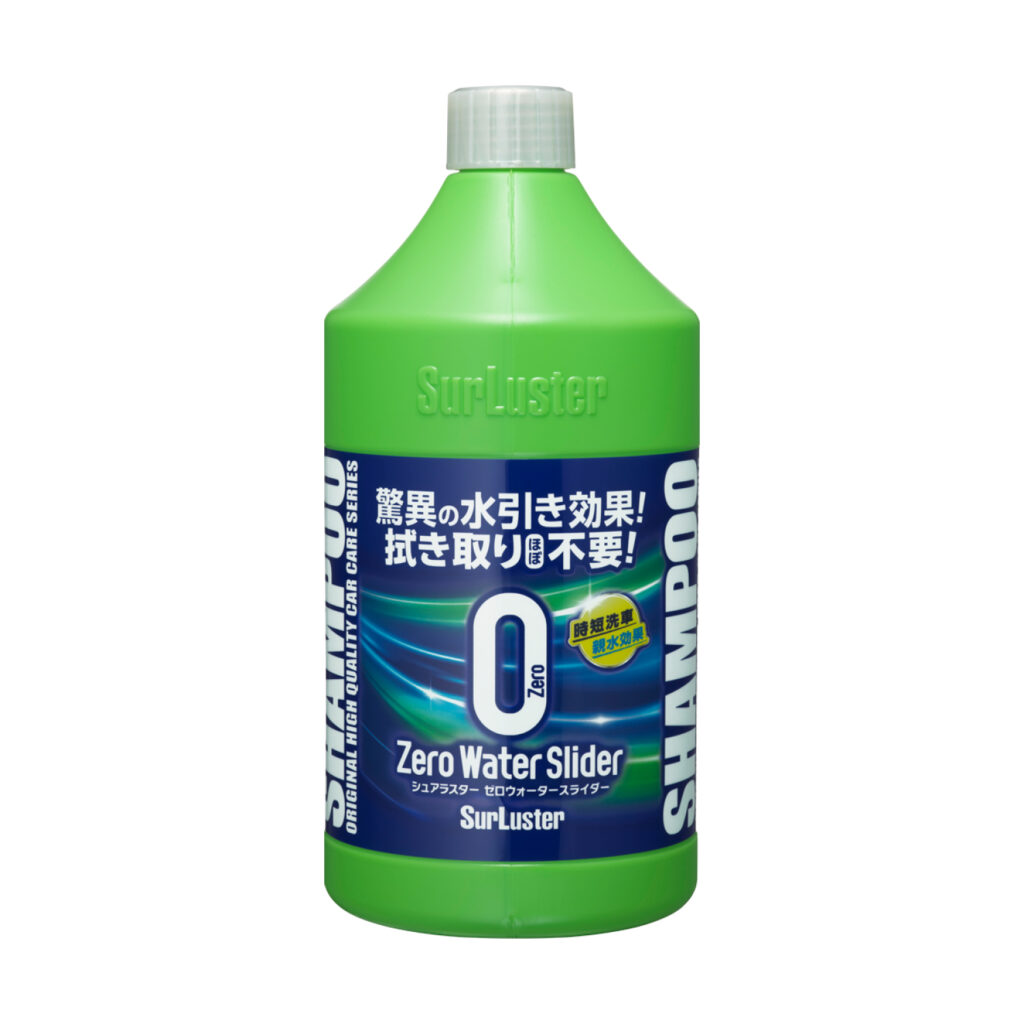
It is safe on wax and coatings and suits all paint types, including metallic, pearl and mica. Mix about 125 mL with 3–4 liters of water in a bucket, wash as usual, and rinse until all the foam is gone. Then wipe off the droplets that remain with a clean drying cloth. Use it out of direct sunlight on a cool body, don’t leave it sitting on the paint, and avoid repainted or worn paint.
Looking after your drying cloths
A drying cloth only works well while it is clean and soft. Grit trapped in the fibers can scratch, and residue lowers absorbency.
- Wash after every use. Hand-wash microfiber drying cloths in water below 40°C (104°F), separately from other items, as the color can transfer.
- Skip the fabric softener and bleach. Fabric softener reduces absorbency, and bleach can damage the material.
- Dry in the shade. Hang cloths in a well-ventilated, shaded place. Don’t tumble-dry or iron them, and keep them away from direct sunlight and high heat.
- Store them fully dry. A cloth put away damp can grow mold.
- New Wiping Cloth? Wash it and soak it in water before the first use to soften it.
Frequently asked questions
- Can I just let my car air-dry?
-
It’s best not to. As the water evaporates, its minerals stay behind as spots, and a warm day or a breeze makes that happen faster.
- What if water spots have already formed?
-
Fresh, light spots often wipe away with a damp microfiber cloth. For spots that won’t budge, Zero Cleaner removes water spots from paint, including on coated cars, as well as from windows and chrome. Test it on a hidden area first, and don’t use it on repainted or deteriorated paint. For stubborn spots and oil film on glass, see our guide to clearing water spots from car windows.
- Does a coated car still need drying?
-
Yes. A coating changes how water behaves on the paint, but droplets left behind can still dry into spots. Dry a coated car the same way, with a soft cloth and a light touch.
Finish every wash with a careful dry
A careful dry is what keeps a clean car looking clean. For an easier finish, take a look at the Magic Cloth for the body and the Detailing Cloth for the small details.
